Showing posts with label DAVIS James George. Show all posts

Friday, October 24, 2025

Church History Biographical Database

 Church History Biographical Database

Includes 32 of our Early Pioneers


7 Missing from Database

Died before and in Nauvoo, and on the trail.

1839 joined Michigan - Adaline RAWSON 1811-1841 Nauvoo
(1844) joined Engalnd - William INGRAM 1790-1844 St Louis
(1844) joined Engalnd - Susannah GRIFFITHS 1811-1844 St Louis
1841 joined Engalnd - Daniel William SMITH 1792-1845 Nauvoo
1844 joined Massachusetts - Horace Datus ENSIGN 1797-1846 Winter Quarters


Arrived in Deseret 1869,
 they sent ahead, four teenage children who had been born in the Church,

1848 joined Engalnd - Henry WORLEY 1827-1914
1848 joined Engalnd - Catherine WILLMORE 


Tuesday, July 24, 2018

Your Welsh Singing Legacy

In 1849 the Buena Vista left Liverpool with your grandparents William Reese DAVIES and his wife Rachel MORRIS

BOOK: The Call of Zion The Story of the First Welsh Mormon Emigrants, by Ronald D. Denis, pages 1 and 14.

Correction:  "On 19 February 1843 he baptized his first converts, the [William Reese DAVIESfamily."


Read about Welsh singing as the ship Buena Vista as it left Liverpool with your grandparents William Reese DAVIES and his wife Rachel MORRIS.  Read the indented section "On Monday, the 26th of February,"

William Reese DAVIES "voice is reported as sounding like a flute."He was called on three different occasions to sing for the Queen of England. "Rachel loved to sing the songs of Zion.". "The family participated in singing at the Welsh National Eisteddfods and, from one of these, son James George DAVIES/DAVIS came home winner of the highest award as a tenor solist."

Monday, May 29, 2017

A 5th Grade Report by a 5th Great Grandson.

William Reese DAVIES is the 5th great-grandfather of Reuben S C.  Reuben's 5th grade (2017) assignment was to give a report on an immigrant.  Reuben researched William Reese DAVIES (1805-1865) on his grandmother's family history blog then wrote, illustrated and reported on his Welsh grandfather. 

first known picture
William Reese DAVIES by Reuben S C.

William Reese DAVIES

Deseret News, 22 February 1865.
DIED - In Kannarah, Iron Co., [5 Feb 1865] of decline, William R. DAVIES aged 60 years.

Brother Davies was born in [New Chapel Perish,] Carmarthenshire [, Wales] in [31 July] 1805, and was baptized by Wm. Henshaw, at Merthyr Tydvil, in 1849, being the first man that received the gospel in Wales. [He then become the first missionary to preach the Gospel in the Welsh language.]

He emigrated to America with the first company of Welsh Saints in 1849, and was ordained a Bishop at Council Bluffs.  He with his family emigrated to Utah in 1852, and for several years (into his health failed him) was Bishop of Harmony and some other settlements.

From the time brother Davies embraced the gospel he was a firm supporter of the principles of truth, and his kindness and sincerity have endeared him to great numbers of the saints.

[Willam R. DAVIES married Rachel MORRIS in Wales about 1824 they were the parents of five children: George (1825-1849), John Rees (1827-1862), Elizabeth DAVIES WILLIAMS DAVIES (1829-1890) James George DAVIS (1832-1909), David DAVIES (1834-1840).  Willam and Rachel's marriage was sealed in 21 May 1856 in Salt Lake City, Utah.]

1865 2-22 Deseret New Obituary
Emigrated 1849 from Wales to Utah 1852.

Ancestral Chain: Reuben, BR, Lark, Kirt DeMar WOOD, Laura Elizabeth PARKER, Elizabeth Ann DAVIS, James George DAVIS, William Reese DAVIES. 


Tuesday, May 23, 2017

Latter-day Saint Missionaries in the Family


I will begin to record family members who have served missions for the Church of Jesus Christ of Latter-day Saints. Listed by year called with the exception of multiple missions served by one person, and siblings.

Simeon Adams DUNN (1803-1883)
Served several Missions
 
  • September, 1841, I was sent to West Canada, on a mission to preach the gospel.
  • 1843 Warren County, Illinois
  • April, 1844 I was ordained one of the Seventies, under the hands of Levi Hancock. In May 1844 I was sent on a mission to the State of New York, to advocate the Prophet's claim to the Presidency of the United States of America.
  • We [as a family] arrived [in Salt Lake City] September 28,1848. I remained there until I was called to go to the South Sea Isles, On May 7, 1850 I set off on a mission to the South Pacific Sea Isles.
  • October 19, 1871, I left Brigham City for the States, on a mission to look up the genealogy of my dead friends, which proved to be a very successful mission. I returned home the 19th of July, 1874, having traveled 10,0000 miles on rail and on the U.S.Seal.
  • November 1, 1877, I was privileged with a mission to St. George, Utah, to officiate for my dead in the Holy Temple of our God. January 27, 1878 returned home. 


John Davis PARKER (1977-1891)
Zions Camp.
Member First Quorum of Seventy
1841 New Orleans, Louisiana


Shadrach ROUNDY (1789-1872)
Member Second Quorum of Seventy

  • 1844 unknown mission - called during Gen. Conf. at Nauvoo.
  • 1849 East


William Reese DAVIES (1805-1865) after being the first man baptized in South Wales 17 Feb 1843 he was the first Welsh speaking missionary. His wife Rachel MORRIS (1803-1882) had been the first woman baptized in South Wales 19 Feb 1843.  She supported the family while William was away in the Lord's service.

  • 1843 South Wales being the first missionary to teach in the Welsh language. 

Son of William Reese DAVIES (1805-1865) and Rachel MORRIS (1803-1882).
James George DAVIS (1832-1909)

  • abt 1852 he filled a mission among the Navajo Indians.  He learned the Navajo language.


Martin Luther ENSIGN (1831-1911)
1857 Handcart Mission to Great Britain
          He left his wife Mary DUNN (married 1852) and three daughters to serve mission.


Three sons of Samuel SMITH (1818-1897)
          son of Samuel Jane INGRAM SMITH
Isaac SMITH (1857-1914)
1878 Great Britain and the Isle of Mann.
          His wife Harriet Camilla ENSIGN (married 1877) sold everything they had to support his mission and give birth to their first child while he was gone.


          son of Samuel and Janett Maria SMITH SMITH
Ernest Carlos SMITH (1875-1927)
1898 British Mission


      son of Samuel and Janett Maria SMITH SMITH
James George SMITH (1865-1934)
1901 British Mission
Married age 33 - wife Mary Louise GILBERT (Married 1885)


Two sons of Henry WORLEY (1827-1914) and Catherine WHILMORE (1822-1904).
Harry WORLEY
1890 Great Britain

William John WORLEY
1925 Southern States


Son of Martin Luther ENSIGN (1831-1911) and Mary DUNN (1833-1920).
Adams Wesley ENSIGN
1896 Southern States


Admas Wesley and his nephew Isaac Samuel SMITH in Johnson City, Tennessee Southern, States Mission.


Three sons of Isaac SMITH (1857-1914) and Harriet Camilla ENSIGN (1859-1930).
Isaac Samuel SMITH
1897 Southern States


Isaac Samuel SMITH served some of his mission in London, England (or possibly a second mission to England)


William Richard SMITH
1906 Swiss and German


Wesley Ensign SMITH
1909 Northern States


Two sons of Isaac SMITH (1857-1914) and Elizabeth FUHRIMAN (1871-1944).
Jacob Isaac SMITH 
1919 New Zealand


Welland Fuhriman SMTIH
1929 Northern States


Son of John WOOD Jr. and Sarah Ann GIBSON
Ether WOOD
1909 Colorado


Son of Frances HAWKES and Eliza COLE 
Clarence Christopher CRESSELL HAWKES (1861-1949)
1892 British Mission
Left family to serve mission. Wife Mary Ann FARNES (married 1886) and four children a fifth child born he was while away.


Four sons of 
Herbert Henry HAWKES (1869-1948) and Sarah Amy JONES (1875-1952).
Herbert Jones HAWKES
1922 Mexico


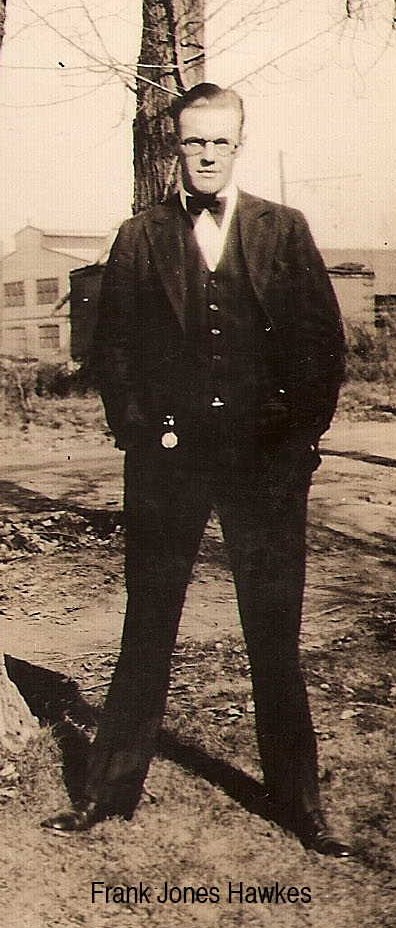
Frank Jones HAWKES
1926 Eastern States


  • abt 1988 Frank HAWKES and his wife Minnie Ann NIELSEN served a mission.  
Lorin Jones HAWKES
(Bishop)
1934 France. [30 month Mission in France Released June 1937.]

  • 1981-83 Montreal Canada French speaking mission with his wife Neva Roundy CARDON.
Blayne Jones HAWKES
1941 California


Modern missions served by family to be added.


Friday, November 4, 2016

Welsh Mormon History

Davies, William Rees
Gender: Male
Birth date: 31 Jul 1805
Birthplace: New Church, Carmarthenshire
Death date: 5 Feb 1865
Deathplace: Kanarraville, Iron County, Utah
Departure: Left Liverpool on 26 Feb 1849 aboard the Buena Vista

"The 249 Saints on Board the Buena Vista were organized with Dan Jones as President of the emigrating company.  He was assisted by three "counselors"; William Morgan, a 46-year-old engineer from Merthyr Tydfil, Rice Williams, a 45-year-old  farmer from Ryymney, and William R. Davies, a 43-year-old tailor from Rhymney.  These four constituted a council, which was to organize and handle all temporal and spiritual matters." (Murland R Paker, History of Elisha Hurd Groves and William Rees Davies and Related Families, p137.)

Arrival: Arrived in New Orleans on 19 Apr 1849

"A few who may have had the funds to continue on to the valley that same year [1849] had been requested to say behind and preside over the other Buena Vista and Hartley [Welsh] immigrants.  William Morgan was called to preside as Branch President over the Welsh branch,and William Rees Davies was called to stay in Council Bluffs as a counselor to [Morgan]."  (Murland R Paker, History of Elisha Hurd Groves and William Rees Davies and Related Families, p147)


"Eighty-four persons led by Dan Jones left Council bluffs for Salt Lake City July 13, 1849 in the  company lead by George A. Smith....William Morgan and William [Rees] Davies followed the departing pioneers for one day's journey from Council Bluffs at the request of Dan Jones. Morgan and Davies then returned to Council Bluffs in order to lead the Saints who stayed behind, and to more completely instruct other Welsh Saints who would travel through Council Bluffs." (Murland R Paker, History of Elisha Hurd Groves and William Rees Davies and Related Families, p146)

Marriage(s): Married to Morris, Rachel on 21 May 1856 at Salt Lake City, Salt Lake, Utah
Sources: Ancestral File

BAPTISM: 1843 First man baptized in South Wales into the Chruch of Jesus Christ of Latter-day Saints 

PIONEER: age 49 with - William Morgan Company departed 22-28 June 1852 and arrived in the Salt Lake Valley 25-30 September 1852. 

William Morgan was appointed Captain of Fifty (the Welsh with a few English and French mad up fifty wagons) which traveled together.  His Counselors were William [Rees] Davies and Rees Jones Williams [Williams was Davies son in-law.] (Murland R Paker, History of Elisha Hurd Groves and William Rees Davies and Related Families, p146 / See Ledger of Rees Jones Williams, Jr.., Church History Library and Archives, #MS 9578.)

Morris, Rachel
Gender: Female
Birth date: 6 Apr 1803
Birthplace: St. Ishmeal, Carmarthenshire
Death date: 28 May 1882
Deathplace: Kanarra, Iron, Utah
Departure:
Left Liverpool on 26 Feb 1849 aboard the Buena Vista

Arrival: Arrived in New Orleans on 19 Apr 1849
Marriage(s): Married to Davies, William Rees on 21 May 1856 at Salt Lake City, Salt Lake, Utah
Sources: Ancestral File

BAPTISM: 1843 First women baptized in South Wales into the Chruch of Jesus Christ of Latter-day Saints

PIONEER: age 46 with - William Morgan Company departed 22-28 June 1852 and arrived in the Salt Lake Valley 25-30 September 1852. 
Davis, Elizabeth
Gender: Female
Birth date: 23 Nov 1830
Birthplace: St. Ishmael, Carmarthenshire
Death date: 27 Sep 1890
Deathplace: Kanarra, Iron, Utah
Departure:
Arrival:
Marriage(s): Married to Williams, Reese Jones Sr. on 1 Apr 1856 at Salt Lake City, Salt Lake, Utah
Married to Davies, John Johnson on 25 Jul 1870 at Utah
Sources:
Resources:
Davies, Elizabeth - Biography

Comments: Surname also spelled "Davies."

Williams, Reese Jones Sr.
Gender: Male
Birth date: 29 Sep 1819
Birthplace: Llanddeusant, Carmarthen, South Wales
Death date: 31 May 1860
Deathplace: Little Cottonwood Canyon, Salt Lake, Utah
Departure: Left Liverpool on 26 Feb 1849 aboard the Buena Vista
Arrival: Arrived in New Orleans on 19 Apr 1849
Marriage(s): Married to Davis, Elizabeth on 1 Apr 1856 at Salt Lake City, Salt Lake, Utah
Married to Williams, Margaret on 11 Apr 1860 at Salt Lake City, Utah

Davies, John Johnson
Gender: Male
Birth date: 28 Dec 1831
Birthplace: Carmarthen, Carmarthenshire
Death date: 23 Dec 1906
Deathplace: Kanarra, Iron, Utah
Departure: Left Liverpool on 4 Feb 1854 aboard the Golconda
Arrival: Arrived in New Orleans on 18 Mar 1854
Marriage(s): Married to Davis, Rachel Maria on 3 Oct 1853 at Carmarthen, Carmarthenshire
Married to Davis, Elizabeth on 25 Jul 1870 at Utah
Sources: Ancestral File
Resources:
Davies, John Johnson - Autobiography

Davis, Rachel Maria
Gender: Female
Birth date: 15 Apr 1833
Birthplace: Carmarthen, Carmarthenshire, Wales
Death date: 17 May 1869
Deathplace: Kanarraville, Iron, Utah
Departure: Left Liverpool on 4 Feb 1854 aboard the Golconda
Arrival: Arrived in New Orleans on 18 Mar 1854
Marriage(s): Married to Davies, John Johnson on 3 Oct 1853 at Carmarthen, Carmarthenshire

Davies, James George
Gender: Male
Birth date: 6 Nov 1831
Birthplace: Llanelly, Carmarthenshire, Wales
Death date: 3 Apr 1909
Deathplace: Kanarraville, Iron, Utah
Departure: Left Liverpool on 1 Feb 1851 aboard the Ellen Maria
Arrival: Arrived in New Orleans on 7 Apr 1851
Marriage(s): Married to Williams, Polly on 21 Oct 1856 at St. George, Washington, Utah
Sources: Ancestral File

BAPTISM: 1845 South Wales into the Chruch of Jesus Christ of Latter-day Saints

"James George Davis" by Esther Parker Robb

"James George Davis" 
by granddaughter Esther Parker Robb
from book "Together Again", edited by Sophia Parker Stapeley


James George DAVIES / DAVIS

Grandpa Davies was a Welshman, very sociable, a lover of music and had a very good voice and was always invited to sing whenever an occasion presented itself. The Welsh used to get together, often holding regular singing festivals (Wales). There were many good singers among them. Grandpa was always the leader. When Grandpa was leading the singing, he would always take off his hat and fold it three-cornered like and whip it back and forth across his leg, keeping time to the music, so the singers ould stay together and follow the beat of the music. One of everybody’s favorite songs that I remember him singing was the Mormon song. There were two versions. This is how they went: The Mormon Song (Sung by James George Davies) First Version:
First Verse Come Brethren and come sisters dear, I’ll sing a song your hearts to cheer; For I’m a Mormon to the bone, I’ll stick to Mormonism. Chorus For we are right and they are wrong, Truth and right to us belong; Let us all join in the song, For the Mormons shall be happy. Second Verse Sectarians say “We’ll go to Hell” And with the Devil we shall dwell; If that is so and all is well, We’ll make of Hell a Heaven. Third Verse The parson said the other day, That Miracles were done away; But poor old parson’s gone astray, So never mind the parson. Fourth Verse The hypocrits may grunt and groan, Because we sometimes sing a song; How can the Mormons hold their tongue, When we are all so happy. Second Version: First Verse Come Brethren and come sisters dear, I’ll sing a song your hearts to cheer; Though hypocrits may laugh and snear, But never mind their chanting. Chorus For we are right and they are wrong, Truth and right to us belong; Let us al join in the song, For the Mormons shall he happy. Second Verse According to sectarian creed, Of gifts and blessings there is no need; They’re satisfied on husks to feed, But ‘tis not so with the Mormons. Third Verse The parson said the other day, That miracles were done away; But poor old horse he’s gone astray; So never mind the parson. Fourth Verse Beyond the times of time and space, They think there is a Heavenly place; Where modern Christians run their race, But they never end their journey. Fifth Verse The gifts they can’t all endure, Because they are beyond their power; The grapes you know were very sour, When Reynord could not reach them. Sixth Verse Sectarians they may grunt and groan, And never cease to sigh and moan; But I’m a Mormon to the bone, And I’ll stick to Mormonism. Seventh Verse The people say we’ll go to Hell, And with the Devil we shall dwell; If that is true and all is well, We’ll make of Hell a Heaven. Another of his favorite songs was “To Zion We will Go.” I only have one verse of it. To Zion We will Go I was so very pious once, I scarce could take a joke; You see how pious I have been, By my religious coat. To Zion we will go, to Zion we will go, We’ll leave the old sectarian, And to Zion we will go. They were a happy group and it was a regular jubilee, with wine as the popular drink. Some liked it. Others drank but very little if any. Grandpa liked his wine. I recall once when I was a very small girl and Grandpa was feeling the effects of his favorite beverage, he called me to shingle his hair. I took the scissors and cut off a lock here and another there and he kept letting me cut it shorter. I kicked and gouged, obeying his orders as he called out ”Shorter! Shorter!,” So I cut it all over as short as I could. The next day when the effects of the wine had worn off and he looked at himself in the mirror, he was so ashamed of the way his head looked, he tied a red bandana handkerchief around to cover it and would not let anyone see his hair. Everybody had a good laugh. Grandpa was a missionary among the Indians. He visited with them to bring about friendly relations and learned to speak their language so he could converse with them quite friendly. They called him “Jim Davies” and were very fond of him. I remember poinkum, his squaw blind Mary, and his two Sons Wiley and Posy. When they came to town in the fall of the year they brought along their pine nuts (piñon) which they had harvested. They had the pine nuts and buckskin to sell. My father always bought a buckskin from them for use in his cobbler work, mending shoes for the family. Mary Squaw used to call at our house to ask for food, always a biscuit. Although she could not see, she recognized mother as “Jim Davies’ Papoose” and spoke of him being “Wino” (this was the Indian word meaning “Good”). Mother learned some of their language from Grandpa, and could converse with them some. “Wino” and “Tuwige-wino” were some of their expressions. I remember very well the day of my Baptism, when I was eight years old. My Grandpa was waiting there at the edge of the pool, with his team of horses all ready to take me to the ranch with him. Just as soon as I was baptized and dressed, and my extra clothes were hurriedly rolled up into a bundle (as I had no suitcase to pack them in), we took off. Grandpa didn’t have a wagon or buggy, just the team of horses and a running gear. That is where we rode, seated on the running gear behind the horses, with Grandpa singing to the top of his voice, all along the way up to the ranch. Just before we arrived, it poured down rain and we both got soaking wet, so I had my second dousing in one day. It was just like being baptized all aver again. Grandpa organized a quartet, in which he had the lead. The other three singers were Martha Williams, John D. Williams, and Henry Davis. They were very popular and almost every social occasion called for the “Welsh Quartet” to entertain the crowd. It pleased the singers to be active, as there was nothing they enjoyed better than using their voices to make harmonious music together. Later when John D. was called back to Wales on a mission, by co-incidence he met up with an elderly lady there who was a former friend of Grandpa’s. She asked John D. about “the little white curly-haired boy who was such a good child singer”. John told her that he was still living, but he was an old man with grey curly hair now, and still a Singer.
Grandpa and I used to get together for our own little singing sessions, which we both enjoyed. I played the organ e he sang, and then I would join in the singing too. Our favorite song was “A Hot Time in the Old Town Tonight”. He wanted me to make a promise that I would sing that one at his funeral.

Ancestry Chain: TR, Lark, Kirt DeMar WOOD, Laura Elizabeth PARKER, Elizabeth Ann DAVIS, James George DAVIS / DAVIES and Polly WILLIAMS.

Monday, October 31, 2016

"My Grandparents, James George Davies and Polly Williams"

"My Grandparents, 
James George Davies and 
Polly Williams" 
from book "Together Again", 
edited by Sophia Parker Stapeley

Born:November 6, 1831
Place: Llanelly, Carmarthen Co., South Wales
Died:April 3, 1909
Place:Kanarraville, Iron Co., Utah
Baptized: January 6, 1845
Endowed: October 21, 1880

Born: May 28, 1831
Place: Springfield, Illinois
Died: August 12, 1914
Place: Kanarraville, Iron Co., Utah
Baptized: July 10, 1851-7?
Endowed: October 21, 1880

Sealed to Husband: October 21, 1880

Events:
-Ordained teacher and Elder October 5, 1880
-Filled a Mission among the Indians

Together 
Married: 1855 or 1856
Place: Not Known
Children: 11, all born in Utah; the first three in Old Fort Harmony, the last eight In Kanarraville.

[Note: because the name "Davis" had been spelled Davies in Wales and mispronounced in America James changed the spelling of his last name to Davis so it would not be mispronounced.]

        As with our other grandparents, we have different stories about each of Grandfather and Grandmother Davies. Let me tell you my story of the both of them first, much which came from my mother and sisters, and then let you hear Esther’s story of them separately. Bear with us if some of the comments are repetitious. Esther and I shared many of the same feelings and experiences.

        James and Polly were among the first settlers in southern Utah, settling first at Kan Creek. Later, Brigham Young, President of the Church and leader of the settlers, had the people move to a settlement of Old Fort Harmony. The Navajo Indians often attacked them there, so they built a fort to defend themselves. The walls were several feet thick. The homes inside were built close together and along the walls. All the settlers were Mormons and they got along well together. The building material for the walls was sun-dried clay brick. They lived there for several years but in 1861 the rains were so heavy that the clay got wet and soft and the walls began caving-in. This forced people to move away from Old Fort Harmony. Some went to New Harmony; others, including James and Polly, went north to the town known as Kanarra.

        James and Polly were dairy farmers. Polly became the manager of the ranch, in effect, running it with her children, and producing the food products. James developed a freighting business, carting the food products by wagon to various mining camps in Utah and Nevada. They worked long and hard. Polly and the children had to hand-milk 50 cows twice a day, for milk, cheese and butter. They raised chickens for meat and eggs; pork for fresh meats, headcheese and scrapple; vegetables; and animal feed. James was on the road quite a bit, going back and forth, delivering supplies and returning for more.

        In those days, all merchandise was paid for in gold coins, and James often carried a great deal of money on his way home from his trips. Travel by wagon and team was not very fast either, and there was always the danger of being way-laid by robbers or bandits. One notorious gang leader of stage-robbers in the area, at the time, was one Ben Taster. James believed that Ben was close on his tail, on one trip. But somehow, by being very careful and using out-of-the-way trails and places to rest, he never was held up.

        They were very charitable people, and came to be known by every one as ‘Uncle Jim” and “Aunt Polly.” Many, many people stopped at their home on their travels through Kanarra, getting hot delicious meals with biscuits and butter and coffee, and staying the night. Polly was an expert at preparing jams and jellies, and she always had “bricks” of head-cheese and scrapple packed in crocks for quick cold lunches. No wonder people loved to stop in and visit! James and Polly developed a ranch in the “Upper Basin” part of the Kanarra Mountains, where they stayed and worked during the summers, and even there they had callers by the dozen. Polly, in particular, had a good sense of humor, and much genuine empathy for helping others with their sorrows and problems. They loved being around her and “Uncle Jim” as well. If wealth was measured in friends, James and Polly were very wealthy people.

        There was another fascinating part of Polly. She had a very deep appreciation for beautiful articles. China was her special interest, but she also had a keen eye for oil paintings, glass dishes and ornaments, and tea sets. Her only brother, William George Williams, was the owner of the Kanarra Co-op Store. Whenever salesmen, or “drummers” as they were called, came to the Store to wholesale supplies to George, as he was called, either he or they learned to call Polly to the Store to get her advice on the type of products to buy, and their quality. She had an eye for the finer things and for knowing what people wanted. There were lots of stories about how she would order the finer things, while her brother would order the heavier “more practical” appliances, and the shelves would soon be sold clean of her orders while his “collected dust.” They say that when the ordered, crated goods would arrive at The Store, Polly would get word to her friends to get there early in order to get the best choices, and that often her orders would be sold or spoken for before George could finish uncrating. When big orders were sold to the Store, the drummers would give Polly complimentary articles or gift sets. Her pantry shelves at home were filled with the beautiful china, glassware, and other gifts that had been given to her! Many years later, when she had passed away, her beautiful sets were divided among her children.

        Spending time with them on the Kanarra Mountain ranch, at “Upper Basin,” was a special treat for those of us who, as “grandchildren” of James and Polly, got the chance. My sister, Laura Parker Wood, enjoyed telling of how they would invite one a grandchild at a time to spend a couple of weeks with them during the summer. One event that everyone looked forward to was going with “Grandpa” on his trips up into the timber to get logs that he sometimes needed to fill orders. He drove his team with just the “running-gears” for this purpose. The children took their turns sitting on the running-gear as the teams hauled the logs along the long stretches of narrow dugways through the tall timbers -- with Grandpa singing at the top of his voice all the way! He was Welsh, remember, and just loved to sing. And when they got back to the ranch, Grandma was always there to give them a hearty welcome! How they loved it, when it was their turn to “go to the ranch.”

        One autumn in 1884 after the summers work had been completed at Upper Basin, James and Polly were on their way back to their home in Kanarra for the winter, with their wagon loaded with the harvested supplies and food. Polly was pregnant at the time, and went into labor while they were still on the trail. They delivered their own baby in the wagon, making the best of the situation. Everything turned out well. The baby was a beautiful, lovely girl. They named her Alice May and she was their last child. Alice May lived a full life and married Henry Pollock.

        There are many other stories which could be told about Grandfather Davies. He was called on to help protect the settlers against many of the Indian raids that were common in those days, but refused to participate in destructive, vengeful attacks against the Indians. Later, he was sent on a mission to work among the Navajos, in order to promote better relationships between the Indians and the settlers. He learned to speak Navajo and developed some close friends among them. Esther had some stories about this, so I won’t go into them here. James built a brick yard in Kanarra and produced the bricks that were used to build the homes in that day; and his sons Lorenzo and George took over the business when he retired. He is credited with having built the first bridge across the creek at Kanarra, and built one of the first homes. It was built in 1863 and still stands in Kanarra!

        The same with Polly -- many other stories to tell. She was a great story-teller, and never seemed to run out of interesting tales. She called faithfully on the homebound, usually taking a dish of their favorite food to them to make them feel better. In her last days, she was bedridden most of the time, but even then refused to have anyone help her with her washing -- which she liked doing. My sister Zina Ett Parker Pollock tried to help her, to no avail, and said, “I think no one could wash her clothes to look so white and clean as she could.”

Their children, and dates of birth, were: 1.Rachel Davies, April, 1857 2.Elizabeth Ann Davies, my mother, January 8, 1859 3.James Lorenzo Davies, February 14, 1861 4.William Rees Davies, March 2, 1863 5.George Alma Davies, February 14, 1866 6.Myron Thomas Davies, March 17, 1868 7.Rees Davies, February 4, 1874 8.Nora Davies, December 24, 1874 9.Eleanor Matilda Davies, January 26, 1877 10.Albert Davies, May 13, 1880 11.Alice May Davies, August 18, 1884

Ancestry Chain: TR, Lark, Kirt DeMar WOOD, Laura Elizabeth PARKER, Elizabeth Ann DAVIS, James George DAVIS / DAVIES and Polly WILLIAMS.

Tuesday, February 16, 2016

LIFE AND FAMILY OF WILLIAM REESE DAVIES

LIFE AND FAMILY OF WILLIAM REESE DAVIES


LIFE AND FAMILY OF WILLIAM REESE DAVIES by Murland R. Packer 1990
William Reese Davies was born in New Church, Carmarthanshire, South Wales, on July 31, 1805. He was the son of Reese Davies and Ann Thomas. He was a tailor by trade. After coming to America, the family name was commonly misspelled. This seemed to be due to the fact that Davis was a common name in America, but Davies was not. Also they reportedly pronounced the name the same as Davis. This led to the common error of others spelling his name without the "e" . Also the "e" was commonly dropped from his middle name, so it became Rees. Because of the confusion, his grandchildren took the name of Davis. His sons were raised in Wales and did not change their name. 
William married Rachel Morris of St. Ishmael, Carmarthanshire, South Wales about 1824. She was born June 6, 1803 in St. Ishmael. [She was the daughter of George Morris and Catherine Anthony.]
Very little is known of their early lives. No personal histories or letters have been found which they wrote. They had five children: 
George Davies was born November 17, 1825 in Glamorshire, South Wales. John Reese Davies was born September 16, 1827 in Cannarthen, South Wales. Elizabeth Davies was born November 23, 1829 in Ferryside, Cannarthen, South Wales. James George Davies was born November ~6, 1831 in Llanelly, Cannarthen, South Wales. David Davies was born May 9, 1834 in Ferryside, Cannarthen, South Wales. Some family research was done in 1984 by Bert J. Rawlins, A.G. His report to Raymond Davis indicated the following:
"The Christening of William Rees Davies, along with those of his brothers and sisters, was found in the baptismal register of Bwlchnewydd Independent Chapel, which is located in Newchurch Parish. William R. Davies and Rachel Monis moved a great deal during their married life." Tragedy struck the Davies family when they lost two sons in death about the same time. David, the youngest, died in December 1840 at the age of six. George, the oldest died about the same time at the age of fifteen. The cause of death is not known in either case. This must have been a great shock to the family. This loss, however, may have prepared them for the message of the Restored Gospel which was soon to come into their lives. (George actually died nine years later in 1849)
The first Mormon missionaries assigned to Wales were Henry Royle and Frederick Cook, who began to proselyte in North Wales in October 1840. Some months earlier others had been preaching in the English counties which border Wales. These missionaries could well have gone into some of the Welsh villages for a street meeting or two. However, there was little success in these missionary efforts. 
The first missionary assigned to the heartland of Wales was William Henshaw. He went directly to cosmopolitan Merthyr Tydfil in South Wales. It was a town which had recently become the industrial center of Wales. With no knowledge of the Welsh language, Henshaw had to proclaim his message in English and hope some would understand. He had to approach people who did speak English and then rely on bilingual converts to teach the gospel to their Welsh speaking countrymen. On February 19, 1843 he baptized his first converts, the family of William Reese Davies. This consisted of William, 37, his wife Rachel, 39, John Reese, 15, and James George who was 11 years old. Elizabeth, 13, was baptized three months later, on May 19, 1843. They were the first converts to the Church in South Wales. They were the nucleus which led to a rapid growth of the Church in Wales. Dan Jones, a Welshman, was baptized in the Mississippi River near Nauvoo in January of 1843. After the Prophet's death he went on a mission to Wales and led the first group of Welsh Saints to the Salt Lake Valley in 1849. 
The town of Merthyr Tydill was very near the English border and it is reasonable that some in the town would be able to speak English. William and possibly other members of his family must have spoken English as well as Welsh and recognized the truth when they heard Elder Henshaw speak.
It is only reasonable that the Davies Family would have been anxious to tell their closest friends of their new faith. This would have led to other baptisms and success of the missionary efforts in South Wales. By June there were 32 members in the Merthyr Tydill area in Penydarren branch, and by the end of the year there were 50 members. Another branch was organized in nearby Rhymni where the Davies family lived.
John James was baptized February 27, 1843 followed by "Tha .. " Griffiths and Mary Griffiths on March 4, 1843. John Reese Davies later married Mary Griffiths. During the next few months several families were baptized including the Thomas, Edwards and Williams families. Elizabeth later married Reese Jones Williams. During the following three years, William Henshaw established several branches in Glamorgan and Monmouth, with a membership totaling nearly five hundred members.
William Davies fulfilled a mission in his native land before coming to Zion. According to Joseph Smith's diary, taken from a little book in the genealogical library, entitled, "Mormons In Wales," he was the first to preach the gospel in his native tongue in Wales. (The author has not been able to find this book in the library.) 
Rachel provided for the family while William was on his mission, by running a cookie shop. They lived in the back of a wealthy family's home. The lady of the house would throw away her dirty clothes. Rachel would gather them up, wash and iron them, and sell them back to the same lady. 
Even though there was increasing animosity and even hostility toward the new converts, the Davies family must have felt blessed because all of their immediate family was active in the Church. 
Music was an important part of family life in the Davies home. According to Raymond Davis, William had a wonderful voice. It was reported to sound like a flute and he was asked to sing for the Queen of England on three different occasions. 
Rachel was a lovely woman. She lived the gospel and loved to sing the songs of Zion. She did all her sewing by hand and being of a happy and sunny nature was happy in whatever she did. She never saw a washboard until she came to America. She always did her washing by rubbing the clothes between her hands. Her children were always clean. At the time of the Church Conference in Manchester in December 1845, there were about 500 members in Wales. Elder Wilford Woodruff appointed Dan Jones to preside over the branches of the Church in Wales, nearly all of which had been established by William Henshaw. Elder Henshaw was to continue as president of the Merthyr Tydfil Conference. The Church grew rapidly in Wales, due in part to the missionary efforts of the Davies family. By the fall of 1846 there were about 900 Welsh members. 
In February 1848 Dan Jones announced that official approval had been given for the Welsh to begin making definite plans for emigrating in a year's time. All were encouraged to payoff their debts, and the wealthy were asked to be generous in assisting the poor. Persecution was becoming intense against Church members and they were anxious to join the other saints in Zion. 
By the time William and Rachel emigrated to America in February 1849, John Reese would have been 21 years old, Elizabeth would have been 19 years old and James would have been 17 years old. None of the children sailed at that time with William and Rachel. The family records of Vilo Pearce, a descendant of James, show that James, "was the first member of his family to come to America. He worked in the mines in Wales and earned his fare to come to America. His hardships were many. As a pioneer he walked across the continent. Later he earned money enough for the rest of his people to come to Southern Utah. Pipe Springs, Arizona was named from an Indian shooting a pipe out of his mouth with an arrow." It seems unlikely that James would have come to America much before the age of 17 and been able to earn money to help his family emigrate. He may have come as far as Council Bluffs with his older brother, John. 
By November 1848 detailed instructions concerning essentials such as food, clothing, trunks and tools were distributed to Church members, and those who intended to emigrate were instructed to pay a deposit of one pound sterling per person no later than December 31, to secure passage. Over three hundred Saints responded.
The plan for emigrating called for all Welsh Saints to meet in Liverpool by February 15, 1849. Those from South Wales met in Swansea on the thirteenth and made the voyage together by steamer, the Troubador. The gathering in Swansea caused a great sensation among the local residents and was even described in considerable detail in the local newspaper. The departure from Swansea was at 9 o'clock Wednesday morning, February 14, 1849 and they arrived at Liverpool the following day at 3:30 P.M. Most passengers became very sick from the motion. This was only a prelude to the 50 days of Atlantic waves on their way to New Orleans.
In Liverpool the emigrants were organized for travel. For some reason departure of the Buena Vista was delayed for another six days and 77 Saints who had paid to board the Buena Vista had to wait another week and sail on the Hartley along with 161 English and Scottish converts. The Music Hall was a large six story building which was rented as lodging for the entire company while waiting to sail.
The 249 Saints on board the Buena Vista were organized with Dan Jones as president of the emigrating company. He was assisted by three "counselors." They were William Morgan, a forty-six year old engineer from Merthyr Tydfil, Rice Williams, a forty-five year old farmer from Rhymni, and William R. Davies, a forty-three year old tailor from Rhymni. These three constituted a council which was to organize and handle all temporal and spiritual matters.
A letter dated from Liverpool on February 25, 1849 was sent as a "last greeting" of the emigrating Saints to the 3,000 Saints who were remaining in Wales. It was sent as an encouragement to them and an admonition for them to follow to Zion. William was one of 25 men who signed that letter. (See Appendix A.) 
Finally the Buena Vista was dragged out to sea about 2 o'clock on Monday, February 26, 1849 as thousands of spectators came out to watch. The voyage then depended upon the wind in the sails and their God in whom they had placed their faith and lives. Fifty days on this crowded ship was a challenge to the new converts, most of whom had never been at sea. The stench and lack of sanitation were ever present trials. William Clayton, on board the ship North America in 1840, described the conditions as, "The wind blew hard the vessel rock and many were sick all night. This was a new scene. Such sickness, vomiting, groaning and bad smells I never witnessed before and added to this the closeness of the berths almost suffocated us for want of air." We can imagine that eventually most of the seasickness abated, or turned to mere agonizing, and that there were some pleasant times on the Buena Vista.
During the journey two women died and were buried at sea and a young couple was excommunicated by the presiding council. By the end of the journey, they had run out of oatmeal, bread and water and had to eat hardtack and drink water full of slime. All supplies were kept at the back of the ship in a storeroom. Dan Jones and his three assistants, including William Davies, were responsible for apportioning allotments to each family. The family or groups of families then prepared and cooked the food by using the cooking facilities in shifts.

They reached New Orleans April 17, 1849. The joy they felt as their feet touched solid ground can scarcely be imagined. However, they probably did not realize in advance that cholera was rampant in New Orleans.
This was only the first leg of a long journey which would take three more years for William and Rachel Davies. Two rivers had to be ascended and the plains had to be traversed before their final destination was reached.
They found that they had caught up with a group of English Saints who had just arrived on the ship Ashland. Dan Jones hired a steamer, the Constitution, which agreed to transport the combined group of nearly 450 passengers a distance of 1,100 miles up the Mississippi to St. Louis. Three of the English Saints died of cholera before they arrived at St. Louis. Although everyone feared cholera, the Saints thought that their faith, combined with the will of the Lord that they arrive safe at their destination, would make them essentially immune. St. Louis was the place to purchase flour, meat, groceries, and everything necessary for the trek to Zion, which would be initiated from Council Bluffs where the Saints would gather. Clothes, firearms, stoves, and even iron to make wagons were included in the buying spree. The Welsh and English Saints transferred their goods to the steamer, Highland Mary. For the last leg of the water journey to Council Bluffs, on May 2, 1849. Cholera broke out on the ship and its journey to Council Bluffs was lengthened by several days to allow time nearly every day for graves to by dug along the shore. During the fifteen day journey, one fifth of the Welsh Saints fell victim to the dreaded disease. Some families were almost wiped out. Oh, the faith it must have taken for those left to continue their journey to an unknown land. For fear of becoming infected themselves, the Saints in Council Bluffs wanted no part of the new arrivals. Isaac Nash recorded in his journal: “We arrived at Council Bluffs in a sorry condition. Nobody would come near us. We were put out on the banks of the river with our dead and suffering. Apostle George A. Smith, hearing of our arrival and of the sad condition we were in, came down to the river banks. . . . Brother Smith sent word to the people that if they would not take us in and give us shelter, the Lord would turn a scourge upon them. It was not long before teams and wagons came down and all were taken care of." The anticipated rejoicing on reaching Council Bluffs was diminished by the unfathomable sorrow which surrounded the Welsh Saints as they dragged themselves into the city. Being shunned by the other Saints did not help to raise their spirits. Of the 249 emigrants who had left Liverpool a few months earlier on the Buena Vista, 19 had abandoned their belief in Mormonism and were searching for brighter horizons in St. Louis and various parts of Missouri. Sixty-seven had died at various points along the way. Those remaining (163) rejoiced in the Lord and continued with their plans for the future. Some made immediate plans to continue the journey to Salt Lake City that season.
Welsh members who left Liverpool on the ship Hartley, arrived in Council Bluffs June 8, 1849. Eighty four persons led by Dan Jones, left Council Bluffs July 13, 1849 in the company led by George A. Smith. Others searched for employment until they could save enough to provide for the long trek. William Morgan and William Davies followed the departing pioneers for one day's journey from Council Bluffs at the request of Dan Jones. At a latter time they would be leading the Saints who stayed in Council Bluffs. Other Welsh Saints who would pass through Council Bluffs could also be instructed more completely. Council Bluffs was becoming rather cosmopolitan with its English, Norwegians, and now a large group of Welsh. Interpreters were kept. busy, as they provided the only way of communicating for many. The need for the Welsh to learn English was diminished by their banding together and by forming a Welsh speaking branch of the Church.
Life for the 113 Welsh converts in Council Bluffs, and for several others who had remained at St. Louis to gain employment, offered numerous difficulties and challenges. Most had not gone ahead with the George A. Smith Company and their compatriots simply because their resources were exhausted by the time they completed the Atlantic crossing and the ascension of the two rivers. A few who may have had the funds to continue on to the Valley that same year had been requested to stay behind and preside over the other Buena Vista and Hartley emigrants. William Morgan was called to preside as Branch President over the Welsh branch and William Reese Davies was called to stay in Council Bluffs as a counselor to him. 
By June of 1852 most of the remaining Buena Vista and Hartley emigrants were fitted out and ready to begin their journey to the Rocky Mountains. During the previous three years while William and Rachel had been in Council Bluffs, they were joined by other Welsh Mormons from various parts of Wales. Those who could afford to continue immediately to the valley did so. Most, however, stayed in Council Bluffs until 1852 when the bulk of the remaining Welsh Saints crossed the plains together. 
By June 21, 1852 the Welsh had gathered near Winter Quarters. They were visited by Apostle Ezra T. Benson. They needed an interpreter to translate Elder Benson's instructions as to how they were to be organized for the crossing. William Morgan was appointed Captain of Fifty (the Welsh with a few English and French made up fifty wagons). His counselors were William R. Davies and Rees Jones Williams, William's son-in-law (husband of Elizabeth). 
On the morning of June 28, 1852, a very hot day, the company finally got under way. In the afternoon of that first day, William showed his lack of experience at driving a team by running his wagon into another one and breaking his axletree. There was a delay until the following day while repairs were made. One can visualize a tailor from Wales who is suddenly on the American frontier trying to drive a team of steers which may have been half wild
. John Johnson Davies made a similar trek from Wales two years later. He records his first encounter with oxen as follows:

“We started on the plains [from Council Bluffs] on the first of July, 1854 . . . . Now I will tell you about the sircuse [circus] that we had the first few days on the plains. Our captain tould us to get up erly in the morning for to get redy to start in good time. After breakfast was over we got the cattle together and tryed to yoke them up. I can assure you that this was quite a task for us and after we got them itched to the wagons we started out. Now corns the sircuse and it was a good one. The Captain was a waching us and telling us what to do. He tould us to tak the whip an use it and say whoah Jake, gee grandy and so on. Now the fun commenced. Then we went afrer them prety lively and when the cattle went gee too much we would run to the off side and yelling at them woah and bunting them with the stock of the whip. then they would go ha to much and we was puffing and sweeting and if you was there to look on you would say that it was a great sircuse. This was a great experience and a tuff one and by the time we got half way across the plains we could drive an ox team as well as you can enney day." The journey of the 1852 Welsh pioneers was considerably more pleasant than it had been for those who crossed in 1849. They had no rain storms and no snow. However, four Welshmen died on the journey.
On September 20th when they were about 80 miles from Salt Lake, they met Dan Jones who had been called to return to Wales on another mission. A few days later several other Welsh brethren arrived in the camp. They had traveled over thirty miles from Salt Lake with a load of watermelons, muskmelons, potatoes, grapes, etc. These delicacies came as a welcome treat to those who had spent three months on the trail. The reunion of these friends must have been wondrous as they were united in "The Valley." On September 25, 1852 they entered Salt Lake City in the early afternoon. For William and Rachel Davies the journey which had begun three and one half years earlier was now complete. Their eyes now beheld the Zion for which they had dreamed and sung about for so many years. The details of where William and Rachel were the first few years after they entered the Valley are unknown. Cora Fonda and Rebecca Stapley report that shortly after arriving in Salt Lake, William was called by Brigham Young to go on an Indian mission and settle southern Utah. They also state that Rockville was one of the first places William and Rachel lived. The first known settlers in Rockville were about 1858. This leaves a question as to whether William and Rachel did actually live in Rockville. They did live for a short time (in 1860) in Grafton which is only two miles west of Rockville. This may account for the reference to Fockville.
In the October 1853 Conference in Salt Lake, fifty families were called to labor among the Indians in southern Utah and to help settle the area under the direction of George A. Smith and Erastus Snow. A few families left that fall. Most families went in the Spring of 1854. It is not known if William and Rachel were among that group. It seems likely that they remained in the Salt Lake area until the spring of 1854.
The Town of Harmony had been settled in the spring of 1853. When President Young visited the area in May of 1854, he organized the missionary work to the Indians and suggested that the townsite of Harmony be moved to higher ground. The next day a site was selected and construction of a fort was initiated. It was 300 feet square and everyone in the settlement lived in the fort. This settlement was called Fort Harmony. The headquarters for missionary work in southern Utah at that time was at Fort Harmony. People probably started moving into the fort that fall. About this time (summer of 1854), there are references to William and Rachel being at Fort Harmony. He was the first Presiding Elder there. This says a lot for his character. He was not a frontiersman nor was English his native tongue. Yet he was called to preside over the new community. His attributes included a strong and abiding faith in this new religion. His spiritual insight and conviction also helped qualify him for the leadership of the branch and later the ward.
The faint outline of the old fort still exists where the old adobe bricks have returned to a pile of soil. The rock foundation can still be seen in some places. The Daughters of the Utah Pioneers have established a monument at the site which reads as follows:

"MONUMENT NO. 59 "AT FORT HARMONY, UTAH "FORT HARMONY "Established May 9, 1854, by John D. Lee, Richard Woolsey, William R. Davis [Davies] and others [Elisha H. Groves] who had founded Harmony in 1852. County seat of Washington County until 1859. Headquarters of Mormon Missions to Lamanites 1853 - 1854. The Fort was finally abandoned in February 1862 following the heavy storms that caused the walls to crumble and fall, the settlers founding New Harmony and Kanarraville. The wall was 300 feet square. Houses on the east side were one story and wall ten feet high, on the west side two stories and wall sixteen feet high. Kanarra and Harmony creeks supplied water for irrigation.
"Put up by Utah Pioneer Trails and Landmarks Association and members of Parowan Stake." The Saints made their own clothes from wool and later from cotton which was locally grown. Each family tried to keep a few sheep to supply their own wool. This wool was carded, spun and woven for their own use. They knitted their own socks and stockings. All boots and shoes were carefully saved for the visits made by a traveling shoemaker.
The people were very resourceful in preparing and preserving food. They dried vegetables and fruits which they raised, as well as what wild fruits they could find. Choke cherries, ground cherries, currants, service berries and elder berries were gathered and used. Molasses and honey were also used for preserving fruit. They made cheese, dried meat and preserved meat and butter in salt. Potato or hop yeast was used for their raised bread. Nearly every family brought with them a Dutch Oven. It served the purposes of stoves for baking as well as for other cooking needs. The com bread or batter cakes were made thin and baked quickly, but the rich, large, round loaves of bread were perfectly cooked when they came out of the bake oven. It required skill in baking to get the loaves baked without burning the edges or being dough in the middle.
Fuel for fires became more scarce and had to be hauled from further sites. Matches were also expensive and scarce. They would try to keep coals through the night. If the coals were out in the morning someone would be "sent for fire." They would look for smoke coming out of another chimney.
Light was another problem. When it was possible to secure tallow, candles were made by either the mold or dip method. As an alternative, a piece of rag with a pebble tied in it was placed in a shallow dish of grease.
Soap was made from tallow using lye leached from cottonwood ashes. The cottonwood ashes were carefully saved in a barrel or box for this purpose.
A Church conference was held in Cedar City on May 20, 1855. The members living in Fort Harmony and Cedar City were organized into a Stake with Isaac Haight as Stake President and William Reese Davies as Bishop at Fort Harmony. Other settlements such as Pine Valley, Pinto, Washington and Toquerville were organized as branches under the Fort Harmony Ward at various times while William was Bishop. William chose Henry Barney as his first counselor and his oldest son, John Reese Davies as his second counselor. His younger son, James George was also living at Fort Harmony.
Minutes of meetings held at Fort Harmony were recorded between February 1856 and July 1860 by Rachel Woolsey, a plural wife of John D. Lee. These minutes give a wonderful insight into life in the area and to a few activities of the family. Rachel Davies was a midwife and assisted families in the fort. Little else is known of her activities. William, as Bishop, was the father of the ward and guided its activities and was arbitrator for the differences between its members. These were probably intensified by the fact that the families were living so dose together.

Rachel Woolsey recorded that a Church meeting was held March 30, 1856 in the home of the Bishop, William Davies. There was some discussion that they must plan to raise enough crops that season for themselves and for others who were expected to join them later in the season. She then recorded the following:

"The Bishop then arose and made a few appropriate remarks on the occasion and said that he held a letter addressed to Prest J. D. Lee but that he would read it as it concerned all the Saints which read this. Dated March 2nd 1856. To Presidents, Bishop, and brethren in the counties of Iron and Washington. I write to inform you that the persons who can get thier endowments must be those who pray, who pay thier tithing from year to year, who live the lives of Saints from day to day; setting good examples before their neighbors; men and women, boys and girls over sixteen years of age, who are living the lives of Saints, believe in the plurality, do not speak evil of the Authorities of the Church, and posses true integrity towards thier friends, can come up [to Salt Lake] after thier crops are sown, and thier case mite be attended to. Brigham Young Heber C. Kimball J. M. Grant " Church records indicate that William and Rachel were sealed in the Endowment House May 1, 1856. They followed the Prophet's advice. They prepared their crops and journeyed to Salt Lake to enjoy this blessing. Others may have traveled with them at that time; but no details have been found.
Rachel Woolsey records that on April 13, 1856, Bishop William Davies spoke "at a good length on the order of the Kingdom of God etc. and his experience in the Church." Oh how we would like to have a record of what he said. She also recorded on April 14, 1856, that Bishop Davies assembled his council to decide on how to finance the public works. The public works included the meeting house, fort wall, gate guard house, pool [well] in the center of the fort and privies on each side of the gate. After considerable debate, a motion was made by Elisha Groves and seconded by the Bishop that a poll tax of 23 dollars be set on each male over 18 years of age and a 15 per cent tax on all property.
Rachel Woolsey recorded the following for Nov. 3, 1856:

 "The Bishop [Davies] and council met to organize the Deacons Quorum. Meeting by singing and prayer after which the Bishop said that he wanted to hear the deacons and Teachers speak thier determination to press forward. They done so satisfactory. After which the Bishop then gave them some instructions how they ought to discharge thier duties in keeping the [meeting] room clean and in order, etc ......... 

"Sunday, November 9th. .. ... Bro E.H. Groves spoke in a Energetic Manar. The Bishop then arose and spoke of the responsibility that rested on him and said that he determined by the grace of God to carry out the spirit of the reformation that had commenced in our midst, etc. "Sunday, November 16th. 2 o'clock p.m. After singing and prayer the Bishop arose and spoke on the duties of the saints, that it was our duties to adhere to the principles of righteousness and not consult our feelings [do as we wish], but conform our feelings to the ordinances of the Gospel- and all would be right. . . . . In the evening the prayer meeting was held. After singing and prayer the Bishop [Davies] gave way for the Saints to use thier privalages [bare testimony]. They done so and they spoke under the demonstration of the spirit of the Lord. Bro. [Elisha H.] Groves spoke of his experiences in the commencement of this Church. Spoke of Angels that appeared in the temple in Kirtland and of the Cloven tongues like as of fire that set upon those that were in that Temple and he said that he felt the same spirit in our midst this evening. Sister Groves testified the same things. After the brethren and sisters spoke the Bishop arose and said that his heart rejoiced in the principles of the Gospel. Said he felt the spirit of God working powerfully in our midst this evening, etc. Sung 'Praise God, etc.' Ben. E.H. Groves.

The families of William Davies and Elisha Groves were very close. At this time Elisha was a member of the ward and Stake Patriarch. Washington County made some early timber and water grants, one of which was a joint grant to William and Elisha (Forgoqen Chapters of History, Vol. I, no. 36), passed December 2, 1856: 

"An ordinance granting the control of timber and water in South Ash Creek to Elisha H. Groves and Wm. R. Davis [Davies]. Be it enacted by the County Court of Washington County, that the right of controlling water and timber for the benefit of the southern settlements be and is hereby granted to Elisha H. Groves and Wm. R. Davis [Davies] of the county. "

The meeting minutes for a Fast Meeting held Thursday, February 11, 1857 record the following: 
"The Bishop [William R. Davies] arose and gave the meeting over for the brethren to testify, pray and use the gifts of the spirit. After several had spoken, J. R. [John Reese] Davies spoke in tongues powerfully. J. D. Lee interpreted equally as powerful. It was an exhortation to the Saints to continue in the work of reformation commenced, etc. The Bishop [William R. Davies] then exhorted the Saints to diligence and faithfulness. Ben. by E. H. Groves. "

Rachel Woolsey recorded that William Davies and his son John R. Davies departed for Salt Lake City, in company with the Stake President Haight and C.W. Dalton, on March 4, 1857. They returned on the evening of April 2nd. She also records the following: 

"Sunday, April 5, 1857 
"The Bishop [W.R. Davies] then arose and testified to what Bro. Dalton had said. He spoke at good length on the principles he had heard at S. L. City, and said he never rejoiced so much in his life to see and hear the progress of the Kingdom of God in these last days. He spoke of the plans of the First Presidency at present in contemplation. Ben. by J.R. Davies. 

"2 o'clock in the afternoon met. Singing. Prayer by H. Barney. J.R. Davies was then called on to address the saints. He said he felt well, never better in his life that he had in his present trip to S.L. City, in seeing the onward progress of the Kingdom of God; that Zion was lengthening her cords & extending her stakes. And he rejoiced in blessings of the endowments which he received on the 21st of March, 1857. (Saturday). The meeting was then given for the saints to testify, etc. Several did speak. Ben. by J.R. Davies. 

"June 28, 1857 . . . . The Bishop [Davies] then spoke of the spirit of indifference and negligence that the saints had fallen into since the reformation, etc., and the necessity of arousing from that lethargy. "

On August 7, 1857 the election returns for Washington County showed that William Reese Davies was elected as County Treasurer. No other information has been found of his political activities. 

William Davies left Fort Harmony on September 20, 1857 and traveled in company with John D. Lee for conference in Salt Lake. They returned on Saturday, October 17th. They brought "with them some news that the soldiers [Johnston's Army] were on the way, etc. They say there is a distemper raging north, called the horse distemper. The Bishop was afflicted with it, and its effects was still on them." Horse distemper was described as causing great pain in the head and a soreness through all the body. On the following day "the Bishop preached and said that he was glad to return again, etc. Said about the spiritual warfare we had to fight and to obtain the victory before we could gain the crown." 

In January 1858 many Saints were afflicted with the horse distemper. On Sunday, the 24th, Bishop Davies was one who was to ill to attend Church services. 

John R. Davies married Patience Sibyl Groves who was also living in the fort with her parents, Elisha and Lucy Groves. Rachel Woolsey recorded the following under the date of February 22, 1858: 

"This day Prest. Haight and wife and daughter, also Prest. E. Snow & wives and several others from Cedar came to celebrate the nuptials of J.R. Davies and William Fream. The tables were set the whole length of the meeting house, and when all things were ready, about 5 pm the ceremony was performed. First J.R. Davies [John Reese Davies] was married to Patence [Patience] Sibyl Groves [daughter of Elisha H. Groves], by Prest. Isaac C. Haight. Also William Fream was married to Mary Morse. And then all sat down to the table to the good things, after which all joined in the dance, etc."

In the spring of 1858 Josua T. Willis, who at that time lived in Fort Harmony, was called to lead a group to settle Toquerville. He was appointed to act as the Branch President. The Branch was organized under the Fort Harmony Ward. He was made Bishop of the Toquerville Ward on November 16, 1861. At that time Toquerville was growing and Fort Harmony was being abandoned. 

Bishop Davies was reported as ill on November 28, 1858 and unable to attend Church. On the following Sunday, he sent a message which asked the Saints to pray for him, " ... that he may recover by the prayer of faith." He was not well enough to attend Church services until January 26th. 

Virgin City was laid out in April 1859, and by appointment of President Isaac C. Haight of Cedar, Nephi Johnson was president of the Branch, which was attached to the Harmony Ward. 

At the Sunday meeting November 13, 1859, Bishop William R. Davies reported that due to his poor health he would have to spend the winter at Virgin. The winter weather was milder there. He appointed his son, and only councilor at that time, to preside in his absence with the assistance of Elisha H. Groves. Henry Barney had moved to another town. 

The meeting minutes for January 1860 reported that the weather was very severe and about eight inches of snow was on the ground. They also reported that Bishop N.C. Tiney had gone to make a new settlement on the Virgin River (Grafton) which was six miles above Virgin City. 

In 1859, Nathan C. Tenney, with some other families from Virgin City commenced a new settlement called Grafton. It was a mile below the present site of Grafton. More settlers arrived in 1860-61. Dams were built in the Virgin River and agriculture commenced. Floods caused by the overflow of the river washed away nearly all the lands claimed by the early settlers. T he townsite was moved in the spring. of 1862. Grain was raised for a number of years, but the Virgin River continued to wash away the soil, the ditches were filled with sand, and dams were continuously washed away. The settlement was abandoned in 1866 and then resettled by a few families a couple years later. 

William and Rachel moved back to Fort Harmony (from Virgin) the first of March 1860 with their son, James and his family. 

A few weeks later, March 31st, William and Rachel left Fort Harmony to visit Salt Lake City (conference) with James. They returned on May 19th. The following day William spoke at some length on the things he had learned in Salt Lake. 

The meeting minutes recorded by Rachel Woolsey end on July 15, 1860 with the following record: 

"The bishop [William Reese Davies] having returned to his present home at Grafton, yet Bro. Lee and his family came together and we had a meeting in which Bro. Lee spoke of the necessity of overcoming our weaknesses before we could inherit the Kingdom of God. J.R. Davies said that anger dwells only in the bosoms of fools, etc., and exhorted to truthfulness and diligence, etc."

No other information is available with respect to William and Rachel living in Grafton. By the following year they are found in Kanarra. 

In 1860 Elizabeth's husband, Reese Jones Williams, was killed in a sawmill accident when he fell on an open circular saw. She then sold her home for an ox team and wagon and she and her four children went to Fort Harmony to live with her parents. She then moved to Kanarra when her parents moved there. Little is known of Elizabeth's life. She was with her husband in Council Bluffs until they came to Salt Lake with her parents in 1852. 

John Johnson Davies (no relation) had married Elizabeth's cousin, Mariah Davies in Wales in 1853. They had emigrated to Utah in 1854, arriving in Salt Lake in October. They were immediately visited by Elizabeth and her husband, Reese, who invited them to stay with them, which they did until after Christmas. How long Elizabeth stayed in Salt Lake is not known. 

By 1860 the people of Fort Harmony decided to move the town site. It was felt that there was not enough water to support Fort Harmony as they were losing to much water in bringing the two creeks, Ash and Kanarra, so far. Half of the people followed John D. Lee to establish New Harmony on the site which had formerly been farmed by the Indian Mission. The others followed Elisha H. Groves to establish the town of Kanarra. 

The company which settled Kanarra numbered about one hundred and eight souls. The heads of families included William R. Davies, John R. Davies, James Davies and others. 

The settlement of Kanarra (also referred to as Kanarrah or more recently as Kanarraville) was started first in June of 1860. It was probably the following spring before most of the families actually moved to Kanarra. 

They held meetings in private homes (log cabins) until a log building was constructed in 1862 which served as a school and church. It was used for all public meetings. It later burned and all ward records were lost. 

The Civil War began in April 1861. President Young with his usual foresight, saw that cotton was going to be at a premium. At October conference that year, he read out the names of 300 families who were to move to St. George. The main company arrived in December. This was a boon to the local economy as these families suddenly arrived. Some of them settled in the existing communities. However, this was the beginning of St. George as the major town in Southern Utah.

President Young visited the settlement of Kanarra in September of 1862 and reported that there were 13 families. He preached one of his "most heavenly discourses" and all rejoiced.
In those days people were compelled to haul their grain a long distance to have it ground into flour. John R. Davies left his wife, Sibyl, and two children to take a load of wheat to get it ground. He expected to return with a winter's supply of flour for his family. The trip took six days traveling with a team of horses and a wagon. It rained on him all the way and as a consequence, he took a severe cold which developed into pneumonia. He died a few days after returning home, in October 1862 (date unknown). Their third child, Mary Ann Davies, was born April 7, 1863 in Old Kanarra, six months after his death. 

At a conference held in Cedar City on November 15, 1862, changes were made in the alignment of wards. Henry Lunt was sustained as Bishop of Cedar Ward. Kanarraville, Pinto and New Harmony were included as branches under his ward. 

Wind storms had been a problem in the new settlement. About 1865 there was a particularly severe wind storm which lasted three days. When it was over, there was much damage and even the cemetery was left with the caskets sitting on top of the ground. Because of this, the town was moved about a mile south to a new and better location in 1866. This was suggested by Erastus Snow, one of the twelve Apostles. The cemetery was also moved to a new location west of the new town. The original townsite is referred to as Old Kanarra. 

Little is known of William and Rachel while they were in Kanarra. William died there February 5, 1865. This would have been in Old Kanarra. 

In November 1866 John Johnson Davies moved his family to Kanarra. He bought a farm with Llewellyn Harris. Llewellyn had married Patience Sibyl Groves, the daughter of Elisha and widow of John Reese Davies, in October 1865. John Johnson Davies was a wonderful singer and was asked to organize a choir, which he did. 

The wife of John Johnson Davies died May 16, 1869 and left him with six children. 

Elizabeth Davies married John Johnson Davies July 25, 1870. They continued to live in Kanarra. 

Elizabeth's mother, Rachel, lived with them for a while. After Rachel's grandson was married and built a home, she spent the rest of her years with him and his family. Rachel died May 28, 1882 and was buried in Kanarra. Elizabeth died in Kanarra September 27, 1890. 

SOURCES OF INFORMATION 
1. "History of William Rees Davies" by Cora A. Fonda and Rebecca Williams Stapley (family records) 
2. “The Call of Zion" by Ronald D. Dennis, published by BYU 
3. Family records of Vilo Pearce, New Harmony, Utah 
4. Minutes of Meetings, Fort Harmony, Utah by Rachel Woolsey Lee, in the Huntington Library 
5. "History of Kanarraville" by Marlyn Lovell 
6. "History of New Harmony" by Laverna T. Englestead 
7. Journal of John Johnson Davies (St. George, Utah Library) 
8. "Under Dixie Sun, A History of Washington County, Utah," by Washington County Chapter D.U.P. 

by Murland R. Packer
May 1990

Ancestral Chain: TR, Lark, Kirt DeMar WOOD, Laura Elizabeth PARKER, Elizabeth Ann DAVIS, James George DAVIS, William Rees DAVIES and Rachel MORRIS.