Showing posts with label WOOD John Andrew. Show all posts

Monday, December 1, 2025

Wood Cowboy Grandpas


4th Great Grandson of John WOOD Sr.

JRA

LWR

KDW

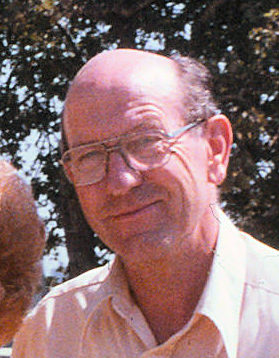
John Andrew WOOD - Laura Elizabeth PARKER. Andrew born in Grafton, Utah 1883, died in Hurricane, Utah 1932

John WOOD Jr - Sarah Jane GIBSON
born in Lehi, Utah at age 5 move to the Virgin river area with parents, Grafton, Pipe Springs, Hurricane

John WOOD Sr - Ellen SMITH

John Wood Sr. lived in Lancashire, England, Lehi Utah, Virgin Utah, Duncan, Utah, Grafton, Utah, Rose Valley, Nevada, back to Grafton Utah, Ellen died there, John moved to Hurricane, Utah.

Cowboys working on the Arizona Strip B. F. Saunders Cattle Ranch.  From left: George A. Gibson, George Cropper (forman), Joe Scow, Moen Indian, Jess Lemman (cook), Parley Warnick, Dave Ballard, John Wood Jr., photo taken at Fredonia, Arizona. 

At the turn of the century everywhere was open range and nearly everyone in the settlements on the river had a few head of cattle. The cattle ranged in the winter in the Big Plain area – Gooseberry Mountain, Rattlesnake, and Caanan Gaps – and in the summer on Kolob Mountain.  (Personal History of Ether Wood)

It was always necessary to have a general roundup in the spring and fall to move the cattle from winter to summer range and vice versa.... (Personal History of Ether Wood)

Some of the men I remember riding with on the range was my father, John Wood, Jr., Dave and Ep and John Ballard, Dave and John Hastings, Frank and Alfred Russell, Dave and Dan Hirschi, Rosewell and Levi and Ben DeMille, Jim Jennings, Frank McMullin, Arch Spilsbury, Ed Higbee, Sam and Hi Ford, my brother [John] Andrew, my cousin Orin Wood, Uncle George and Dardy Gibson, Jim and E. N. Stanworth, and Tom Reeve. (Personal History of Ether Wood)

John Andrew Wood, Orin Wood, Henry Ballard, George Andrew Gibson

1902 Orin Wood, unknown, unknown, George Henry Wood Jr., George Wood Gibson, John Andrew Wood, Angus Franklin Ballard, George Andrew Gibson Sr.

Grafton, Utah


[John Andrew Wood born in Grafton 25 April 1883] in a two-room frame house about ¾ of a block from the one room adobe schoolhouse where I went to school and church and all public gatherings. (Personal History of Ether Wood)

John Sr and Ellen Wood home in Grafton 

My grandfather’s house (John Wood, Sr.) was across the street west. My grandfather and his wife, Ellen Smith Wood lived in the back room and Uncle George and Aunt Emily Wood Gibson lived in the front two rooms. Emily was the youngest child of John Wood. My grandfather’s house is still standing. My brother, Andrew [John Andrew WOOD], moved my father’s house and barn to Hurricane in 1911 and lived in it until he died and his family moved to Salt Lake City about 1932. (Personal History of Ether Wood)


Andrew moved his parents [John Wood Jr and Sarah Jane Gibsonhouse and barn from Grafton to Hurricane, Utah. Kirt DeMar Wood was born in that house in Hurricane.  

My father’s barn and corral was about 300 yards south from the house and across the street west about 100 yards south from the “south” ditch. I never could understand why he didn’t build them close to the ditch so we would not have to drive the horses and cows to water three times a day. (Personal History of Ether Wood)

John Wood, Sr. was a blacksmith in Grafton.

Across the street east from the barn was a small rocky hill. Just north from it was my father’s blacksmith shop. Two of my jobs at the shop was to blow the bellows to make the fire hot and the other was to help him fix wagon wheels when the tire would get loose. He would take it off, put it in the fire and get it to a white heat then put it in the tire shrinker, push down on the lever which would make the tire smaller. He had a measuring wheel about 8 inches in diameter with the which he would go round the wheel, also the tire. It was necessary to have the tire slightly smaller than the wheel. To put the tire on the wheel he would lay the tire flat on the ground, put the three bricks or rocks under to hold it about three inches from the ground, then crisscross stove wood around it. When it was red hot and expanded he would put it on the wheel, pour water on to cool it and keep from burning the fellies. (Personal History of Ether Wood)

Across the ditch north at the top of the lot where the house was, was a molasses mill. (Personal History of Ether Wood)

There was two streets running east and west. On the street on the south side on the east end was Uncle “Nen” Wood’s log barn and corral – also a short distance west was his two-room log house.... On west was Frank Russell, Albert Russell, and William Isom. William Isom was my Uncle. His wife Mary was my mother’s sister.... (Personal History of Ether Wood)

.... At this time the Piute Indians must not have had a reservation. They would pitch their teepees on the edge of town. The people of Grafton was sociable and good to them. The squaws would make regular trips around town carrying sacks containing flour and vegetables. They would usually walk in the house without knocking, and unless you asked them to sit, they would stand. They wouldn’t say anything unless you started a conversation. The Grafton women would add a little to what they had; then they would go.... My father [John Jr] could speak the Piute language quite well. (Personal History of Ether Wood)

Indian photo from the collection of Laura Parker Wood

They had no wagons. Their method of moving camp was to take two poles about 12 feet long and put one on each side of a horse – like shaves of a sleigh. The horse would hold up one end, and the other would drag on the ground. They would put their belongings on the poles behind the horse. Quite often the kids would ride too. The squaws would ride the horse. In the summer they would move to the mountains and higher ground. My father’s old friend, Poincum, would move to our ranch on Kolob. There was no game laws then, and when Poincum would get a deer he would skin it and quarter it and carry it in on the hide. He always gave us a hind quarter. (Personal History of Ether Wood)

A great deal of his [John Wood Jr] early life was spent in the cattle business. He was known as one of the finest horsemen there was. His old companions said he could ride a horse, or rather a bucking bronco, with a dime in either stirrup without losing them from the stirrup. (Funeral of John Wood Jr.)

He  [John Wood Jrwas not a profane man, and while working on the range he was a leader and an example of honesty and integrity. As an active church worker, he served for twenty years in the bishopric with James Ballard and J. N. Stanworth, at Grafton, Utah. (Funeral of John Wood Jr.)

In the spring of 1898, the worst tragedy in the history of Grafton happened. Uncle Nen Wood [George Henry Wood Sr] was killed by an outlaw horse. The men from the towns on the river gathered in the street in front of our place to start on the spring roundup. I remember as they started out one of them shouted “Here goes Roosevelt’s Rough Riders.” (It was during the Spanish American War.) When they were about a mile from where they were going to camp at “The Troughs” the outlaw horse started to buck. When the horse wasn’t able to throw his rider, he threw himself on his side. Uncle Nen’s head hit the ground so hard it caused a concussion of the brain. He never regained consciousness. Nen and my father had never been separated. I have heard my father tell about their boyhood. One thing I remember well was he said they had one pair of boots between them and they took turns wearing them. (Personal History of Ether Wood) / (This is one of several accounts of this family death.)

When I [Ether] was 13 and 14 years old [1903], my brother Andrew, who was six years older than I, was going to school in Provo in winter and worked for the Bar Z Cattle Co. in the summer. That left me to look after the cattle and farm. (Personal History of Ether Wood)

In 1904, when I was 15, I went on the biggest cattle roundup that was ever held in Northern Arizona. There were 75 men and 200 saddle horses and 8 chuck wagons. I can only remember two besides myself in what was called “The River Outfit.” They were Uncle George Gibson and Jim Jennings. We were holding all the river cattle that had strayed, and some had been driven from their winter range....(Personal History of Ether Wood)

In 1906 when I was 17, we moved to Hurricane, although we lived in a tent with a board floor and walls for six years. We built a barn, stable, and corral; fenced the lot and field; and worked on the canal.

In 1907 when I [Ether] was 18, I rode horseback 100 miles to the Buckskin Mt. (It is now the Kaibab.) to see if I could get a job with the Bar Z Cattle Company. It was owned by Benjamin F. Saunders of Salt Lake City. He sold out in the fall of the year to a company in Los Angeles. I found the outfit in Pleasant Valley. It is about 15 miles from the headquarters ranch in the V.T. Park. I was lucky getting a job. The men with the outfit were Charley Demmick (main boss), Dave Rider Forman, George [Henry] Wood, Jr. [uncle], [John] Andrew Wood my brother, Dardie Gibson [cousin], Arch Swapp, Oscar Littlefield, Hi Pollack, Tommy Cafel, Billy Craine, and Jake Hopkins.  (Personal History of Ether Wood)

 About 1897 John Wood Jr. bought the Ranch on Kolob Moutain

About the turn of the century, my father [John Wood Jr] bought a ranch on Kolob Mountain from [his brother in-law] Moses Gibson. It was on Big Creek about a mile up the valley from what is now Kolob Reservoir. We lived there many years in the summer and darried. Our milk cows were range cattle and were quite hard to break to milking. We would lasso them and snub them to the fence, Quite often when we turned them loose we would have to go under or over the fence to keep from getting a horn in the seat of our pants. (Personal History of Ether Wood)

Kolob Ranch
Andrew, Ether, Augusta Carter, Sarah Jane Gibson, Iona, John Jr, Roland Parker Wood

Kolob Ranch
Andrew, John Jr, Sarah Jane

We didn’t have a cream separator. We had a milk house built of logs with rows of shelves on each side. We would put about a half gallon of milk in each pan. About every other day my mother would skim the cream into a 10-gallon churn that had a crank handle on one end that went round and round until it was churned to butter. This round and round job was one of mine. I really got my exercise. (Personal History of Ether Wood)

Be sides this job and helping milk the cows I had two more jobs. We turned the cows on the open range in the day and I had to round them up each evening before milking time. I also had to deliver milk and butter to sheep camps for miles around. In the back end of the milk house which had but one door we stored grain and other supplies. One day, to our surprise, one of the big work horses squeezed through the door and was eating grain in the back with shelves of milk on both sides. We were very careful to not get him excited. We had to work him slowly out backwards. There was a log extending from each side and under the door, so we had to lift each of his feet over one at a time. After that, we kept the door shut! (Personal History of Ether Wood)

Grouse was quite plentiful. With my 22 single shot Stevens rifle, I helped some to supply meat for the family. (Personal History of Ether Wood)

To go to Kolob from Grafton with a wagon or buckboard, we had to go down the river nearly to Virgin then up North Creek, past Mountain Dell and the Mill. On horseback, we could take a cut-off on a trail up the Black Mountain, north across Coal Pits and cross North Creek about a mile above the Mill where we would come into the road. 
(Personal History of Ether Wood)

My father 
[John Wood Jrkept horses and cattle on the ranch from early spring until late fall. He often sent me up horseback to see how everything was. It usually took me until the middle of the afternoon to make it. I didn’t like staying at the ranch alone, so I would hunt the nearest sheep camp to spend the night and then ride back to the ranch at daylight. Sheep herders always seemed to like company. Two of them I remember best was Hi Prince and Jim Taylor. They herded for Joe Prince. His range joined our ranch. (Personal History of Ether Wood)

1911 I [Ether] was released from LDS  [Western States Mission] Dec. 16, 1911 from Durango. I came over the D. and R.G. (Denver and Rio Grande) through the Black Canyon of the Gunnison to Salt Lake City, on the U.P.R.R. (Union Pacific Railroad) to Lund, and from Lund to Cedar on BenNell Stage. My brother, Andrew, met me in Cedar with a team and buggy. I arrived in Hurricane between Christmas and New Years. Found my folks still living in a tent. (Personal History of Ether Wood)

Spring 1912 [Ether] went to Moapa Valley, Nevada on horseback to sell trees for Frank Barber. I stayed part time with Uncle Mose Gibson at St. Thomas. Coming back, the first day I rode from St. Thomas to Littlefield, Arizona, the second day to Hurricane 60 miles. I rode a little white horse of Andrew’s (my brother) named Pedro. In 1912 I also worked at the Cripps Brick Yard and [Ether] hauled rock for the foundation of my father and mother’s house with a wagon from on top of the Hurricane Hill. I also helped build the house. (Personal History of Ether Wood)

In the spring of 1916, I quit work for Esplins and bought a few cattle and ranged them on the Kolob Ranch in summer and in the South Hills in winter. In winter I tended camp for Charles Lundgren. During the winter of 1917 -1918, I tended sheep camp for Bill Smith and my brother, Claud Wood, herded the sheep. In the spring, Claud quit and another brother, Clarence Wood, and a cousin, George Isom, helped me trail the sheep to the shearing corral and the lambing ground on the Bullock Plains where we lambed them. After lambing, I quit and lived on the Kolob Ranch during the summer. (Personal History of Ether Wood)

John Andrew Wood 

Sheep on Kolob, John Andrew and Ether Wood


... Spring of 1918, I bought some cattle from Bill Spendlove. I ranged them on the Kolob Ranch in summer. I fenced the southeast side of Little Creek Mountain for a winter range. Also, my father, [two younger brothers] Claud, Clarence, and I started a sheep buck herd. In the spring, we ranged them in the Berry Springs area and on the Kolob Ranch in summer. The following are some of the sheep men that owned the bucks: Albert Lundell, Charles Lundgren, Oscar Larson, Joe Prince, Howard Chamberlain, John Spendlove, Wm. Spendlove, Ted Atkin, Henry A. Pace, Wm. & John Adams, Thorleys, Brinkerhoffs, and others. We continued this about 4 years.  (Personal History of Ether Wood)

John and Sarah Wood home in Hurricane, Utah 

on horse back Ether, Sarah Jane Gibson, Iona - Ether's daughter, John Jr, William Erwin Wood


 John Wood Jr 1883-1932
John Andrew Wood 1883-1932 on a barrowed horse as an extra in a Wester movie being made in the Hurricane area

Brands including grandfathers John Wood Sr, and John Wood Jr, uncle Ether Wood, cousin Orin Wood


Wednesday, March 24, 2021

Monuments and Markers - Noble Hurricane Pioneers

 Hurrican Vally Heritage Park

Noble Hurricane Pioneers 

Note: the Pioneer Women are included

Listed Grandparents :


Listed Aunts and Uncles:

Emily Wood Gibson 1867-1951

Ether Wood 1889-1974
Augusta B. Carter Wood 1888-1965

Angus Franlin Ballard 1885-1992

William Erwin Wood 1893-1969
Elsie Stout 1892-1980

Claudius Wood  1896-1944
Marguerite Dalton 1896-1974

Listed Cousins:

Iva Orilla Williams Wood 1890-1964

Joseph Andrew Scow 1883-1962
Emily Ellen (Ella) Wood Scow 1884-1919

Harriet Fidelia Flanigan 1887-1918
Anna Jennings 1884-1965

Lafayette Hall 1888-1980
Mary bertha Wood 1889-1980

Elmer Ford Wood 1892-1964
Josephine Spendlove Wood 1895-1927

John Nennial Wood 1897-1952
Martha Bradshaw Wood 1900-1964

George Wood Gibson 1885-1942/45
Jessie Helen Jennings 1889-1974

Jessie Bliss 1885-1961
Ellen Mae Gibson 1885-1972

John Edgar Gibson 1889-1973
Wealth Workman Gibson 1893- 

William Abner Gibson 1892-1953
Reeta Iantha Campbell Gibson 1896-1980 

Henry Melvin Gibson 1894-1963

Historical facts: Hurricane was first settled in 1896. The Hurricane Canal brought water to the area. It built over a period of 11 years (1893–1904), mostly by pick and shovel.


Friday, January 24, 2020

Do We Look a Like Our Fathers ?

Do we look like our Father and Grandfathers


Our Father

Our Grandfathers
WOOD Andrew - lived to 49
SMITH Ensign - lived to 69

Our  Great Grandfathers
WOOD John Jr - lived to 73
 PARKER Charles - lived to 81
 SMITH Isaac - lived to 56 
HAWKES Herbert - lived to 78

Father and Son

Tuesday, November 29, 2016

John WOOD Jr. (1858-1931)

History of John Wood Jr. 
Husband of Sarah Jane GIBSON
written by grand daughter Metta Wood Tweedie

John WOOD Jr. (1858-1931)  /  Sarah Jane GIBSON (1863-1936) holding John Andrew WOOD (1883-1932)

John Jr. and Sarah's children. 
Oldest to youngest in picture taken abt 1897: John 'Andrew' Wood (1883-1932), Ether (1889-1974), Ivie (1891-1985), William Erwin (1893-1969), Claudius (1896-1944). Not pictured: Ellen May (1885-1886) and Pearl Ann (1887-1887), Clarence (1899-1955) and Josephine (1902-1902).


Pipe Springs 1891 

John Jr. remembered climbing upon the chicken coop in Lehi, Utah to watch Johnston's Army March by when they left Utah. 

John Jr. played the fiddle and spoke Pauite. 

One of the Dulcimers made by John Wood Sr. in on display at the Pipe Springs Arizona National Monument.

Johns parents had come to Utah from England. He was born in Lehi moved to Virgin Utah as a child moved to Long Valley, Nevada, Duncan, Utah then back to Grafton Utah. He lived in Rose Valley, Nevada.  John with his brother George Henry moved to Pipe Springs Arizona to work at braking horses. Then moved back to Grafton. John ranched on Kolob Mountain summers (starting in 1900). The family built and lived in Hurricane, Utah (1906).


Left: George Andrew Gibson, George Cropper, Joe Scow. standing-Toby (Indian), standing-Jess Lemon, Pete Warnick, Dave Ballard and John Wood Jr. 

#5 Will Isom home (Bishop and brother in-law to John Wood Jr), #10 Tithing house, #15 Blacksmith shop, #17 original John Wood home, #18 John Wood sr. Home (George Andrew Gibson brother in-law to John Wood Jr - lives with Wood Sr), #19 John Wood Sr. barn, #20 George Henry Wood home ('Nen'), #22 Grafton Church/School, #23 Mosasses mill, #32 John Wood Jr. home, #33 Sorghum mill, Cemetery location shown.

From Ether Wood (1889-1974) History: [In Grafton we lived in a two room frame house about three fourths of a block from the one room adobe schoolhouse and church.] My grandfather's house was across the street west.  His house is still standing in Grafton [as of 2016]. In 1911 Andrew moved my Fathers house and barn to Hurricane and lived in it until he died and his family moved to Salt lake City about 1932. ...[Just north from the rocky hill] was my fathers blacksmith shop. 


From Ether Wood History: The Expression "The river", meant Springdale, Rockville, Grafton, Duncan, and Virgin. My father had the first Grain binder on the river.  It took three horses to pull it.  It would cut the grain and tie it in bundles with twine.  The grain was never stacked in the field, it was hauled to town and stacked in round stacks.  My Father [John Wood Jr.] and Uncles, George Gibson, 'Nen' Wood and Will Isom [the Bishop and husband of my mothers sister] had the first threshing machine on the river also. They threshed all the grain on the river.  The Thresher had two parts. (1) the separator and (2) the horsepower [10 horses in 5 teams]....

During the early 1890's the men of Grafton donated their time and work to make a road up the Grafton Mountain, south of town.... This mountain road was so steep it really worked a team of horses to pull an empty wagon up and one of my fathers trips for wood on Gooseberry Mountain I went with him. When we arrived at the top of the mountain he stopped and made me get off and walk.  He had what he called a "shoe" he had made to put under the rear wheel and chained it to the rack side.  It slid down the mountain and he wouldn't have to brake very much. [This trip the "shoe" had been forgotten.] He hadn't gone far, [me following on foot] when the link which supported the brake bar to the rack side broke and turned him loose with no brake at all and the horses trying to out run the wagon made so much dust I couldn't see the road.  I groped along as fast as I could when I came to where the wood, including the rack and rear axle and wheels had gone over the rock wall on the lower side.  I looked among the scattered wood for my father but couldn't see him. When the dust cleared I could see him down the road. The ranch which holds the front and rear axles together had broken and the front axle pulled out and the horses continued on with the front axle. [The horses were going so fast when they came to the S turn they they not able to make the turn] and went straight on through the rocks.... It was a miracle that my father survived.

by Metta WOOD TWEETIE granddaugter of Jouh WOOD Jr. 

From Ether Wood History: In 1906 we moved to Hurricane. Although we lived in a tent with a board floor and walls for six years. We built a barn, stable and corral, fenced the lot and field, and worked on the canal.  


John Wood Jr. barn built in Grafton and move board by board to Hurricane by son Andrew in 1911. Stood near the Hurricane house into the 1970's. 
John Wood Jr.

John Jr. help buitd the St. George Temple by hauling lumber by wagon. He and Sarah Jane Gibson were later married in the St. George Temple. 

John worked at several trades. He was in the hauling business using wagons with teams of  horses. He and his brother George Henry Wood "Nen" broke horses. "Nen" died from a horse falling on top of him. Like his father he was also a blacksmith and a farmer. John was an owner in the co-op Threshing Company.  John and his son John Andrew Wood helped build the Hurricane Canal. John was a rancher on Kolob Mountain. John served as counselor in the Grafton Bishopric 1887-1907. He served as a Justice of the Peace and a County Commissioner. 

From Ether Wood History: About the turn of the century my father bought a ranch on Kolob mountain from Moses Gibson. It was on big Creek about a mile up the valley from what is now Kolob reservoir. We lived there many years in the summer and dairyed, our milk cows were range cattle and were quite hard to break to milking. We would lasso them and snub them to the fence, quite often when we turned them loose we would have to go under or over the fence to keep from getting a horn in the seat of our pants.... My Father kept horses and cattle on the ranch from early spring until late fall.

 Kolob Ranch 1916
From center: Augusta, Sarah Jane, Iona, John Jr., Parker 1916
men by horses possible 1916 Andrew, Ether, 

 Fixing the Step on the Kolob cabin.
Andrew, John Jr., Sarah Jane, Parker

1918 Ranch at Kolob.
Ellen (1918-1934), Iona (1914-2006) (daughters of Ether Wood) and Parker (1913-1983) (son of John 'Andrew' Wood) in the Kolob potato patch.
Iona and Parker at the wood pile.